
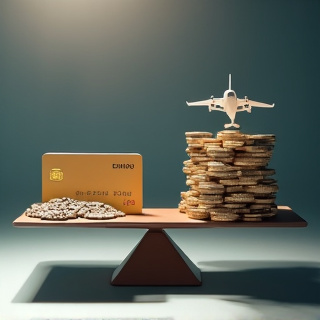


You proudly swipe your debit card at the grocery store, carefully avoiding the debt trap of a high-interest credit card. You think you are making a disciplined, responsible financial choice. But you are actually paying a hidden, reverse Robin Hood tax—to the tune of $141 a year for a typical family—just to fund the luxury travel points of the shopper in line behind you.
A fascinating April 2026 working paper from the National Bureau of Economic Research has finally put a precise price tag on this invisible financial shift. Every year, consumers who pay with cash and debit cards quietly funnel approximately $30 billion to credit card users [1].
Here is exactly how the trap works. When a shopper uses a premium rewards credit card, the merchant gets hit with a steep 'interchange fee'—a swipe fee often averaging around 1.90% to 2.25% of the transaction. The credit card issuer uses the bulk of this fee to fund lucrative airline miles, hotel points, and cash-back perks [1]. Because merchants operate on thin margins and cannot afford to simply absorb that cost, they raise prices across the board for everyone.
Since cash and debit users pay those inflated shelf prices but do not receive any of the kickbacks, they are effectively cross-subsidizing the premium cardholders. The NBER researchers calculate that cash buyers lose about 0.96% of their purchasing power to this system, while regulated debit card users lose 0.47% [1]. If your household spends $30,000 a year on groceries, gas, and everyday retail items, swiping your debit card quietly erases $141 from your wallet. If you prefer paying in paper bills, you are giving up roughly $288 a year [1].
The study also highlighted a behavioral quirk called 'consumer sorting' that slightly softens the blow. People who rely on debit cards tend to shop at different stores than people wielding premium travel cards. Because heavy debit users often frequent discount retailers, and those massive chains have the leverage to negotiate lower private swipe fees, the wealth transfer is slightly muted [1]. However, the $30 billion drain remains a reality of the modern economy.
This setup puts budget-conscious consumers in a frustrating bind. If you switch to a credit card to reclaim your lost purchasing power, you enter a notoriously expensive borrowing environment. According to the Federal Reserve Bank of New York's latest Quarterly Report on Household Debt and Credit, total outstanding credit card balances surged by $44 billion in the fourth quarter of 2025, reaching a record $1.28 trillion [2].
For millions of Americans, the pursuit of credit card rewards ends up costing more than it pays. Bankrate data shows that average credit card interest rates are currently hovering at 19.57% [3]. Falling behind on your payments and carrying a balance into the next month will instantly wipe out any cash-back or travel points you managed to earn.
You cannot change the plumbing of the American payment system, but you can position your own wallet to stop leaking money. Here is how you can play defense against the swipe fee tax this month:
- Audit your checkout habits. If you have the absolute discipline to pay off your balance in full every single month, consider using a no-annual-fee, flat 2% cash-back credit card for your daily expenses. This effectively allows you to 'opt out' of the checkout tax by reclaiming the markup.
- Set up protective autopay. Before you make the switch to a rewards card, link it directly to your primary checking account and set it to pay the statement balance in full automatically. Paying nearly 20% in annual interest just to earn 2% cash back is a flawed math equation [3].
- Hunt for the cash discount. Certain businesses—particularly gas stations, local restaurants, and independent contractors—do not bake interchange fees into their universal pricing. Always check if there is a posted 'cash price' that legally bypasses the swipe fee entirely.




Comments (1)
Leave a Comment