


The Surprise
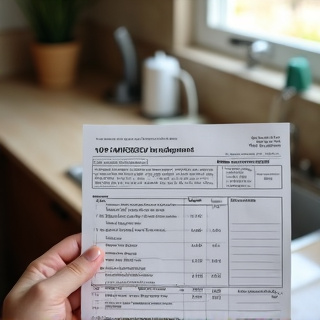
If you have logged into your brokerage account recently, you have probably seen the popup: an invitation to join a fully paid securities lending or stock income program. The pitch is simple. You allow your broker to lend out the shares you already own, and in return, they pay you a small daily interest rate. It feels like free money.
But there is a hidden tax trap buried in the terms and conditions that could easily wipe out those extra pennies. When your shares are on loan, you no longer receive standard corporate dividends. Instead, you receive substitute payments in lieu of dividends.
For a typical household holding a $100,000 portfolio of dividend-paying stocks yielding just 2 percent, those dividends normally qualify for a preferential 15 percent tax rate. But the IRS treats substitute payments as ordinary income. If those payments are pushed into a 37 percent tax bracket, you are suddenly paying an extra 22 percent in taxes. That means this supposedly free program is quietly costing you an extra $440 in surprise taxes. For most investors, the meager interest earned from lending shares does not come close to covering the upgraded tax bill.
What the Data Shows
This obscure tax quirk is affecting more retail portfolios than ever as stock lending explodes into a massive global business. According to industry tracking data released in April 2026 by EquiLend, the global securities lending market generated a record $3.84 billion in revenue during the first quarter of the year alone, representing a 31 percent jump from the previous year [1].
A significant portion of this growth is being fueled by everyday investors. Retail brokerages have increasingly rolled out automated lending programs to capture a slice of this multibillion-dollar pie. At the same time, the Federal Reserve has shifted its monetary policy stance. Anticipated Fed rate cuts and declining yields on cash equivalents have pushed retail investors to aggressively reduce their cash holdings and dive back into equities [2].
As regular investors load up on stocks, brokerages suddenly have access to a massive, untapped pool of lendable inventory. Financial institutions are capitalizing on this retail influx by packaging securities lending as a seamless, opt-in feature. While the total loan balances across the industry recently surpassed $4.2 trillion, the actual interest paid out to the retail investors supplying the shares remains incredibly small. Most of the revenue generated from lending these assets stays with the clearing firms and brokerages, leaving retail clients holding a potentially complex tax form at the end of the year.
Wall Street's $10 Billion Cash Cow: Global Securities Lending Revenue
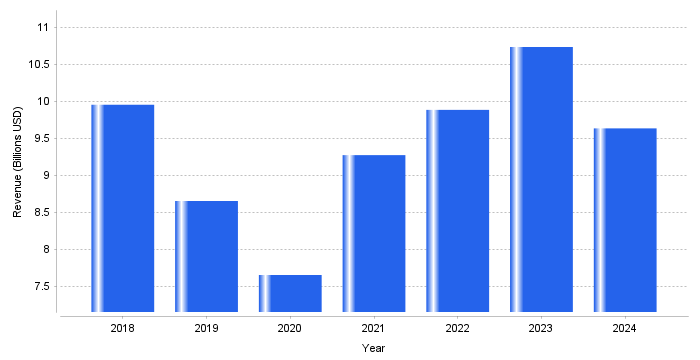
This dataset tracks the total global revenue generated by the securities lending market from 2018 to 2024. The data demonstrates that securities lending is a massive, multi-billion-dollar industry, with revenues peaking at $10.74 billion in 2023 . While brokerages and clearing firms reap these billions by lending out shares , retail investors often bear the hidden tax consequences of substitute payments in lieu of dividends. Investors should check their brokerage account settings to opt out of fully paid lending programs if they want to avoid these surprise taxes.
| Year | Revenue (Billions USD) (Billions of USD) |
|---|---|
| 2018 | 9.96 |
| 2019 | 8.66 |
| 2020 | 7.66 |
| 2021 | 9.28 |
| 2022 | 9.89 |
| 2023 | 10.74 |
| 2024 | 9.64 |
Source: DataLend (EquiLend) — Global Securities Lending Revenue (2018-2024)
The Mechanism
To understand why your tax bill changes, you have to look at the plumbing of the financial system. Research from the National Bureau of Economic Research outlines exactly how the over-the-counter securities lending market operates [3]. When short sellers want to bet against a stock, they must borrow the shares first. Your broker acts as the intermediary, transferring your shares to the short seller.
During the time your stock is out on loan, you are no longer the legal owner of record on the company's books. If the company issues a dividend while your stock is borrowed, the actual dividend goes to whoever purchased the shares from the short seller.
Because you are still entitled to the economic value of that dividend, the short seller is required to reimburse you out of pocket. The IRS explicitly classifies this reimbursement as a payment in lieu of dividends. It is taxed at your standard, ordinary income bracket rather than the much lower capital gains rate applied to qualified dividends. The financial mechanics meant to make you whole actually trigger an entirely different, and more expensive, section of the tax code [4].

Who Wins, Who Loses
The clear winners in this arrangement are the brokerages and clearing firms. They generate billions of dollars in risk-free revenue by lending out assets they do not actually own, typically keeping anywhere from 50 to 90 percent of the lending fees for themselves. Short sellers also win, gaining access to the necessary inventory to execute their trades.
The losers are everyday retail investors holding taxable brokerage accounts. While participants receive a tiny fraction of the lending revenue, they bear the full brunt of the resulting tax inefficiencies. Furthermore, retail investors temporarily forfeit their proxy voting rights while the shares are on loan, losing their voice in corporate governance decisions. You take on the tax complications and give up your shareholder rights, all to subsidize an industry generating billions for Wall Street.
Your Move
If you want to protect your dividend income from unnecessary taxes, you can fix this issue in a few minutes.
- First, log into your taxable brokerage account, navigate to your settings, and search for terms like stock income, fully paid lending, or yield enhancement. If you are enrolled, opt out immediately to restore your qualified dividend status.
- Second, review your most recent 1099-MISC tax form. If you see numbers reported in Box 8, which designates substitute payments in lieu of dividends, your broker has already been lending your shares.
- Finally, if you genuinely want to participate in securities lending, restrict the practice entirely to tax-advantaged accounts like an IRA or 401(k). Because these retirement accounts are tax-sheltered, the ordinary income penalty on substitute payments does not apply, allowing you to collect the extra lending pennies safely.







Comments (8)
Leave a Comment