



The Billionaire's Secret to Lowering Monthly Housing Costs
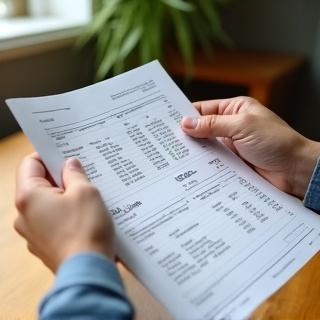
The United States Census Bureau's latest American Community Survey, released in late January 2026, confirmed what every homeowner already feels in their checking account: keeping a roof over your head is more expensive than ever. The data shows that median monthly homeowner costs currently hover around $1,963, a figure heavily propped up by the inescapable, recurring burden of property taxes [1]. For most middle-class families, this tax bill represents one of their largest annual housing expenses, especially as property values have surged over the last few years. Because property taxes are ad valorem—meaning they rise alongside the market value of your home—you end up paying more in taxes even if you have not realized a single dollar of actual cash gain from your home's appreciation. But while the average homeowner simply groans, tightens their household budget, and writes a check when their annual tax assessment arrives in the mail, the ultra-wealthy treat that official government document very differently. They treat it as an opening negotiation.
There is a completely legal, highly effective, and surprisingly accessible mechanism that allows you to push back against your local government's math. It is called a property tax appeal, or a tax protest. According to foundational research from the National Bureau of Economic Research, a successful direct appeal reduces a homeowner's property tax burden by an average of $579 in the very first year [2]. Because local property reassessments typically operate on a multi-year cycle—often locked in for three years at a time—that single administrative victory can easily compound into more than $1,700 staying in your bank account rather than padding the local municipal budget.
So, what does this mean for your money? It means you are likely treating a subjective, algorithmic guess as a rigid financial mandate. Local taxing authorities are perfectly happy to let you keep doing exactly that. When you blindly accept your county's initial valuation of your home without taking the time to verify the underlying data, you are effectively leaving hundreds of dollars on the table—money that the richest households in the country systematically claw back every single spring. Understanding the massive gap between how the middle class and the wealthy handle this routine financial chore is the very first step to ensuring you are not unnecessarily overpaying for the privilege of owning your own home.
The Mass-Appraisal Illusion and the Wealth Gap
To understand exactly why your property tax bill is negotiable, you have to understand the structural mechanics of how it is calculated in the first place. Local municipal governments simply do not have the manpower, time, or budget to send a licensed appraiser to personally walk through every living room, kitchen, and finished basement in the county. Instead, they rely heavily on mass-appraisal algorithms. Assessors use generalized, broad-stroke data points like neighborhood averages, exterior square footage, your zip code, and a handful of recent nearby sales to extrapolate the value of your specific property.
By definition, this algorithmic approach guarantees a significant margin of error. The mass-appraisal system completely ignores the nuances of your actual living space. If your home has an aging roof, an unfinished second bathroom, and an outdated 1990s kitchen, but the house down the street just sold for a massive premium because of a luxury, down-to-the-studs renovation, the county's system might artificially inflate the value of your property to match the new neighborhood trend. The assessor's office knows these errors exist, but the burden of proof is entirely on the homeowner to identify and correct them.
This dynamic creates a fascinating and deeply frustrating behavioral gap. Another foundational study from the National Bureau of Economic Research analyzed the exact mechanics of tax protests and uncovered a stark divide in who actually utilizes this system to lower their housing costs. The researchers found that the average appeal rate for a typical middle-class household—defined as those living in homes valued between $200,000 and $249,000—is a meager 8 percent. In sharp contrast, a staggering 49 percent of households in the richest 1 percent file property tax appeals on a regular basis [3].
The mechanism driving this massive disparity is simple information asymmetry combined with bureaucratic friction. The ultra-wealthy employ dedicated teams of financial advisors and tax attorneys who automatically challenge assessments as a standard operating procedure. They understand that a Notice of Appraised Value is not a final decree, but rather the starting point for a financial conversation. Meanwhile, middle-class homeowners are often intimidated by the intentionally dense, bureaucratic jargon. Faced with the prospect of navigating convoluted forms, finding comparable sales, and potentially appearing before a local Board of Equalization, the average person assumes the government's number must be mathematically infallible, or that the effort simply is not worth the potential reward.

Historically, local governments have relied heavily on the apathy of the general public to maintain predictable revenue streams. If every single homeowner appealed their valuation, the municipal tax system would grind to a halt under the administrative weight. Therefore, the appeal windows are intentionally kept brief, and the notices are formatted to look indistinguishable from a final, unyielding bill. The structural reality is that the local tax system anticipates and prices in a certain amount of pushback from the wealthy, while relying on the silence of the middle class to balance the books. When you fail to appeal a mass-appraisal error, you are not just overpaying your fair share; you are quietly subsidizing the neighbors who took the time to push back.
How to Execute Your Own Tax Rebellion This Spring
With 2026 property tax assessment notices currently hitting mailboxes across the country, your window to act is rapidly closing. Depending on your jurisdiction, you typically have only a few weeks from the moment that letter arrives to launch a formal challenge. By treating your assessment as an opening bid rather than a final ruling, you can reclaim control over your monthly housing costs. Here is exactly how you can stop overpaying and secure your own assessment reduction this year.
- Find your exact deadline today: Appeal windows are incredibly strict and highly localized. In Texas, the general deadline is May 15, or 30 days after your notice is delivered [4]. In Cook County, Illinois, rolling deadlines for different townships begin opening in March and close roughly 30 days later [5]. Do not wait for the actual tax bill to arrive in the winter; check your county assessor's website this week to find your specific spring cutoff date.
- Pull your own comparable sales: The strongest argument you can make is that comparable homes in your neighborhood are valued lower than yours, or recently sold for less than your assessment. Use free real estate platforms to find three to five homes with similar square footage, age, and lot size that support your case.
- Document your deferred maintenance: Because the county's algorithm assumes your home is in average to good condition, proving otherwise is a highly effective strategy. Take clear photographs of cracked driveways, aging HVAC units, or water damage, and submit them alongside your appeal to prove your home would not command top dollar on the open market.
- File an informal appeal: You rarely need to show up in a courtroom to win. Many jurisdictions allow you to submit your evidence through a simple online portal. The assessor's office will review your data and often offer a settlement reduction to avoid scheduling a formal board hearing.
- Outsource the headache: If the bureaucracy feels too overwhelming, consider using a contingency-based property tax appeal service. These companies handle the paperwork and data gathering, charging a percentage of your first year's savings. If they fail to lower your bill, you pay them absolutely nothing.






Comments (7)
Leave a Comment