

1. WHAT HAPPENED
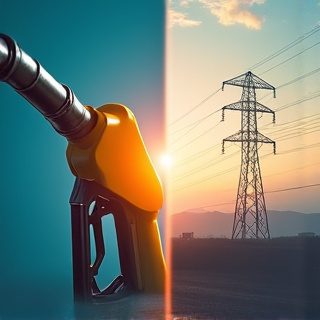
For millions of Americans, the monthly budget has developed a split personality. A trip to the gas station feels increasingly like a bargain, with prices tumbling to multi-year lows. Yet, opening the electric bill has become a source of sticker shock, as rates climb relentlessly despite the cooling inflation numbers elsewhere.
This divergence marks a rare decoupling in the energy market. Typically, energy costs move in a pack—when oil spikes, utility bills often follow. But recent data confirms a "Weird Gap" has opened up: the price of fueling your car is crashing, while the price of powering your home is surging. This isn't just a seasonal blip; it signals a structural shift in how America consumes and pays for energy.
Electricity Prices Surge 6.3% in Jan 2026, Creating a 14-Point Split with Deflationary Gas
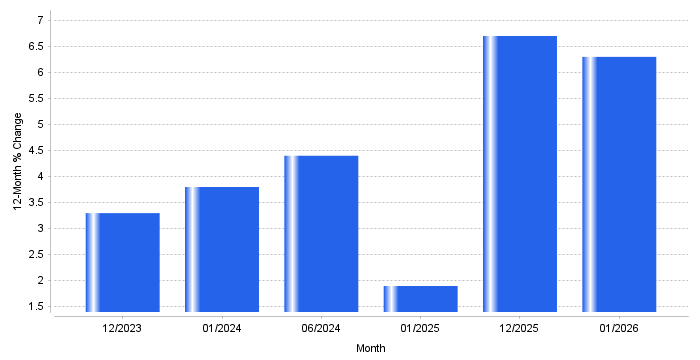
This dataset tracks the 12-month percentage change in residential electricity prices, confirming the article's central claim of a 'Energy Split.' While the article notes gasoline prices fell 7.5% in the year ending January 2026, electricity inflation accelerated significantly, rising from 1.9% in January 2025 to 6.3% in January 2026. This divergence highlights the structural demand shock on the grid driven by new technologies like AI, even as oil supplies remain abundant.
| Month | 12-Month % Change (Percent Change (Year-over-Year)) |
|---|---|
| 2023-12 | 3.30 |
| 2024-01 | 3.80 |
| 2024-06 | 4.40 |
| 2025-01 | 1.90 |
| 2025-12 | 6.70 |
| 2026-01 | 6.30 |
Source: U.S. Bureau of Labor Statistics — Consumer Price Index for All Urban Consumers (CPI-U): Electricity (12-Month % Change)
2. THE NUMBERS
The latest inflation data reveals a stark divide between energy commodities (like gasoline) and energy services (like electricity):
- Gasoline is plummeting: The gasoline index fell 7.5% over the 12 months ending January 2026, acting as a major deflator for overall consumer prices [1].
- Electricity is surging: In sharp contrast, the electricity index rose 6.3% over the same 12-month period [2].
- The Widening Gap: This creates a nearly 14-percentage-point spread between the two primary energy costs for households. While energy commodities overall are down, the cost of delivered energy services continues to heat up [1].
3. WHY NOW?
Two distinct economic forces are pulling these metrics in opposite directions.
On the gasoline side, the U.S. is swimming in supply. Domestic crude oil production remains near record highs, creating a supply glut that has insulated American drivers from some geopolitical volatility. The Department of Energy recently touted this "era of energy dominance" as a key driver for the lowest gas prices in nearly five years [3].
On the electricity side, the grid is facing a demand shock it hasn't seen in two decades. After 15 years of relatively flat demand, U.S. electricity consumption is growing again, driven by what state regulators call "mega users"—specifically data centers powering artificial intelligence and cloud computing [4]. The Energy Information Administration (EIA) reported that wholesale electricity prices rose in 2025 largely due to this rising demand and higher natural gas costs for generators, which have now passed through to residential bills [5].
4. WHAT'S INTERESTING OR UNUSUAL
The twist is that the very technology promised to optimize our future—Artificial Intelligence—is currently presenting a hefty invoice. While "tech" usually drives deflation (making things cheaper), the physical infrastructure required to train and run AI models is inflationary for the power grid.
Foundational research from the National Bureau of Economic Research (NBER) highlights the mechanism behind this tension. Data centers are becoming massive, capital-intensive loads that stress local grids. While these centers have the potential to be flexible—shifting their computational work to off-peak hours to save money—the immediate reality is that their sheer scale requires significant grid upgrades [6]. Utilities are spending billions to harden infrastructure and add capacity, costs that are increasingly socialized across all ratepayers, not just the tech giants.
5. WHO IT AFFECTS
- Consumers: Households are seeing a budget rotation. Savings at the gas pump are effectively being transferred to the utility company.
- EV Owners: The "fuel" math is shifting. While charging an EV is generally still cheaper than buying gas, the gap is narrowing as residential electricity rates rise and gas prices fall.
- Utilities & Investors: Power companies are entering a capital-intensive "supercycle" to upgrade grids, potentially boosting their long-term value but pressuring short-term customer rates.
6. HISTORICAL CONTEXT
This split is an anomaly. During the energy shocks of the 1970s or the commodity boom of the late 2000s, oil and electricity prices generally moved in tandem. Today's divergence is more reminiscent of the late 1990s tech boom, where specific sectors saw inflation while commodities remained cheap.
For context, the 6.3% rise in electricity prices [2] is nearly triple the Federal Reserve's overall 2% inflation target, making it one of the stickiest parts of the consumer basket. Meanwhile, the 7.5% drop in gasoline [1] is the most significant relief consumers have felt in the energy sector since the post-pandemic corrections.
7. WHAT THIS MIGHT MEAN
First, expect the "AI Tax" on utility bills to become a political flashpoint. As regulators in states like Minnesota and Virginia have noted, residential customers are beginning to ask why they are footing the bill for infrastructure driven by tech companies [4].
Second, we may see a push for "dynamic pricing" to accelerate. The NBER research suggests that for the grid to handle this new load without bankrupting consumers, data centers must become more flexible participants, ramping power usage down when the grid is stressed rather than just consuming a flat baseload [6].
Finally, the inflation narrative is changing. It's no longer about "everything getting more expensive." It's about a bifurcated economy where physical goods (fuel, cars) get cheaper, but essential services (power, insurance, housing) continue to climb.




Comments (1)
Leave a Comment