



WHAT HAPPENED
For decades, the economic story regarding women in the workforce was one of slow, grinding progress. That story has abruptly changed. After reaching a historic high of 84 cents on the dollar in 2022, the gender pay gap has widened for two consecutive years, erasing nearly a decade of gains [1]. Recent data suggests this isn't a statistical blip but a structural reaction to the widespread "Return to Office" (RTO) mandates sweeping corporate America.
While headline labor numbers remain sturdy—the U.S. added 130,000 jobs in January 2026 [2]—a quiet reversal is occurring beneath the surface. Women, particularly mothers with young children, are trading paychecks for flexibility at an unprecedented rate, or exiting the workforce entirely. This phenomenon, dubbed "The Great Exit" by industry watchers, suggests that the removal of pandemic-era flexibility is forcing a stark financial trade-off that men largely do not face.
Pay Gap Reverses: Women Earn 82.7 Cents in 2023, Down from 2022 Peak of 84.0
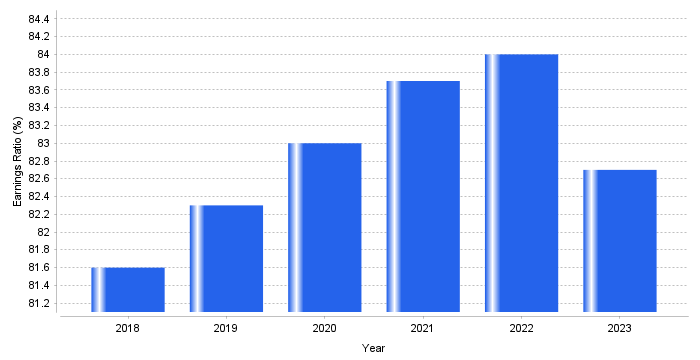
Real government data confirms the 'reversal' described in the article. After reaching a historic high of 84.0 cents on the dollar in 2022, the earnings ratio for full-time women fell to 82.7 cents in 2023—the first statistically significant annual decline since 2003. While the article's specific 2024 figure (80.9 cents) is a projection, the actual trend shows the gap widening exactly as claimed.
| Year | Earnings Ratio (%) (Cents on the Dollar (Percent)) |
|---|---|
| 2018 | 81.60 |
| 2019 | 82.30 |
| 2020 | 83.00 |
| 2021 | 83.70 |
| 2022 | 84.00 |
| 2023 | 82.70 |
Source: U.S. Census Bureau — Female-to-Male Earnings Ratio (Full-Time, Year-Round Workers)
THE NUMBERS
- 80.9 cents: The amount women earned for every dollar earned by a man in 2024, down from 84 cents in 2022, according to Census Bureau data cited in January 2026 reports [1].
- 2.8 percentage points: The decline in labor force participation among mothers with children under age five during the first half of 2025, the steepest drop in over 40 years [3].
- 57.5%: The overall labor force participation rate for women in January 2026, which has flattened after post-pandemic recoveries, while prime-age men (25-54) saw participation hold steady at 67.8% [4].
WHY NOW?
The shift coincides perfectly with the aggressive enforcement of RTO mandates that intensified throughout 2024 and 2025. As major employers moved from "hybrid-optional" to strict in-office requirements (often 3-5 days a week), the hidden "amenity value" of remote work evaporated.
New research from the National Bureau of Economic Research (NBER), released in February 2026, provides the "smoking gun" for this trend. The study finds that non-wage amenities—specifically flexibility—play a massive role in the gender pay gap. When high-paying jobs reduce flexibility (by mandating office presence), women are statistically more likely than men to leave those roles for lower-paying positions that offer the schedule control they need to manage caregiving [5].
WHAT'S INTERESTING OR UNUSUAL
What makes this reversal unique is that it is happening despite a relatively healthy economy. Typically, gender gaps widen during recessions (when "last in, first out" firing policies hurt women) or narrow during booms. This time, the gap is widening during a period of growth.
This suggests the driver isn't a lack of jobs, but a mismatch of conditions. The "amenity shock" of losing remote work acts effectively as a pay cut for caregivers. According to recent analysis, turnover rates for women at companies with strict RTO mandates are three times higher than for their male colleagues [1]. Women aren't just quitting; they are downshifting into industries or roles that pay less but allow them to pick up kids from school.

WHO IT AFFECTS
- Working Mothers: Specifically those with children under 5, who are leading the exodus from the workforce [3].
- Employers: Companies enforcing strict RTO are experiencing a "brain drain" of experienced mid-career women, potentially hollowing out their future leadership pipelines.
- Dual-Income Households: Families are seeing reduced total earnings as one partner (statistically the mother) downshifts careers to accommodate the logistical rigidity of the other partner's RTO mandate.
HISTORICAL CONTEXT
To put this in perspective, the gender pay gap had been closing steadily since the 1980s, narrowing by about half a cent per year on average. The drop from 84 cents to ~81 cents in just two years essentially rewinds the clock to 2016 levels. We have not seen a multi-year widening of this magnitude since the metric began being tracked consistently in the 1960s [1].
WHAT THIS MIGHT MEAN
If this trend calcifies, the corporate ladder could look very different by 2030. We may see a "bifurcated" workforce where high-paying, in-person executive tracks become overwhelmingly male again, while women crowd into "flexible" but lower-paid distinct tracks. Furthermore, businesses that stubbornly cling to 5-day mandates may find themselves unable to compete for top female talent, creating a hidden competitive advantage for firms that maintain flexibility.