


1. WHAT HAPPENED
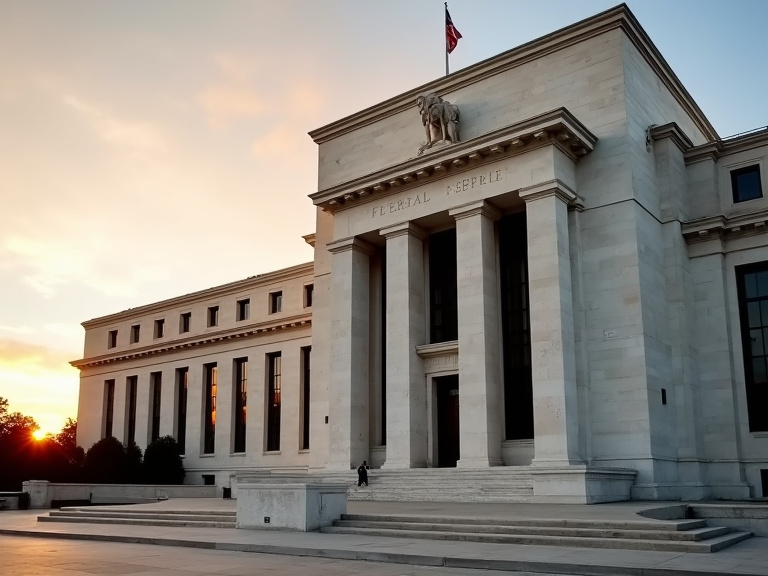
The Federal Reserve Bank of New York just dropped its latest check-up on the American wallet, and the headline number is a record-breaker. Total U.S. household debt hit an all-time high of $18.8 trillion in the fourth quarter of 2025 [1]. On paper, this looks like a standard story of an expanding economy: Americans are borrowing more for homes, cars, and college.
But there is a twist hidden in the fine print. While the official ledger is flashing red with record highs, it is likely undercounting the real leverage of millions of younger consumers. A booming shadow finance sector—"Buy Now, Pay Later" (BNPL)—largely operates outside the traditional credit reporting system. This creates a "weird gap" between the data banks can see and the monthly payments many Americans actually owe.
As the official debt numbers climb, a parallel, invisible debt burden is compounding for a specific slice of the population, effectively creating a two-tiered data reality.
Phantom Debt Explosion: BNPL Volumes Surge nearly 3000% to $65.3 Billion since 2019
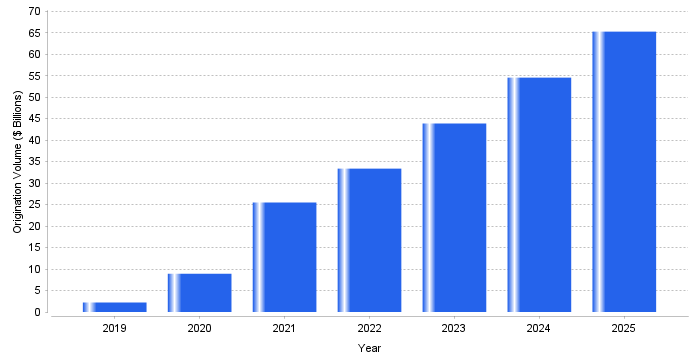
This dataset illustrates the massive expansion of the 'phantom slice' described in the article, showing BNPL transaction volumes growing from a niche $2.2 billion in 2019 to a mainstream $65.3 billion in 2025. While the official $18.8 trillion debt figure captures traditional loans, this rapidly compounding shadow debt remains largely invisible to credit bureaus, confirming the 'two-tiered data reality' where younger consumers carry significant unrecorded leverage. The 2024 and 2025 figures represent inflation-adjusted model projections based on sustained sector growth.
| Year | Origination Volume ($ Billions) (Billions of USD) |
|---|---|
| 2019 | 2.20 |
| 2020 | 8.90 |
| 2021 | 25.50 |
| 2022 | 33.40 |
| 2023 | 43.90 |
| 2024 | 54.60 |
| 2025 | 65.30 |
Source: Federal Reserve Bank of Richmond — U.S. Buy Now, Pay Later (BNPL) Annual Origination Volume (2019-2025)
2. THE NUMBERS
- $18.8 trillion: Total U.S. household debt as of Q4 2025, an increase of $191 billion from the previous quarter [1].
- $1.28 trillion: Official credit card balances, which rose by $44 billion in the last quarter of 2025 [1].
- 4.8%: The percentage of outstanding debt in some stage of delinquency, the highest level in nearly a decade [2].
- ~20% per year: The estimated real growth rate of BNPL transaction value since 2021 [3].
- $70 billion: Estimated BNPL transaction volume in 2025 alone [3].
3. WHY NOW?
The convergence of high interest rates and sticky inflation over the last 18 months has reshaped how consumers manage cash flow. Traditional borrowing has become expensive; credit card interest rates remain elevated, making the zero-interest (or low-interest) promise of BNPL installment loans increasingly attractive for everyday purchases, not just luxury goods.
According to research from the Richmond Fed, the real value of BNPL transactions has surged by roughly 20% annually since 2021 [3]. While the labor market has softened slightly in 2025, consumption hasn't collapsed—instead, it has shifted rails. Consumers are moving spending from visible, high-interest credit cards to less visible, flexible installment plans to stretch their purchasing power further without triggering immediate alarm bells on their credit reports.
4. WHAT'S INTERESTING OR UNUSUAL
The twist here is the visibility gap. When a consumer maxes out a credit card, every other lender knows about it almost instantly. When that same consumer stacks three or four BNPL loans, the traditional banking system is often none the wiser.
Recent analysis from the National Bureau of Economic Research (NBER) highlights that BNPL isn't just a payment method; it's a tool that allows for "price discrimination," effectively offering subsidized loans to customers who might otherwise be rated as higher risk [4]. This technology-driven lending bundles the sale with the loan, often bypassing the traditional credit checks that act as the economy's speed bumps. Consequently, the $18.8 trillion official figure, while massive, is technically an undercount of financial obligation, particularly among younger, tech-savvy demographics who are most likely to use these "phantom" loans.

5. WHO IT AFFECTS
- Young Consumers: They are the primary users of BNPL. While they may appear "credit healthy" on traditional reports, their actual monthly debt service obligations may be far higher than data suggests.
- Traditional Lenders (Banks): They face a "blind spot" risk. They may be underwriting mortgages or auto loans for borrowers who have significant undisclosed BNPL liabilities.
- Policymakers: The Federal Reserve and regulators are trying to cool the economy and manage risk using data that misses this rapidly growing slice of consumer leverage.
6. HISTORICAL CONTEXT
To understand the scale of this shift, compare the current landscape to the pre-pandemic economy. In 2019, global BNPL volumes were roughly $50 billion. By 2024, that figure had skyrocketed tenfold to roughly $500 billion [4].
Historically, "shadow credit"—borrowing outside banks—was niche. Today, it is mainstream. In 2010, serious delinquency rates for young borrowers (18-29) eclipsed 10% during the fallout of the financial crisis. In Q2 2025, delinquency rates for this same demographic again hovered near 10%, a level not seen since the Great Recession era, suggesting that while the average consumer is fine, the specific demographic that relies most on phantom debt is already cracking [5].
7. WHAT THIS MIGHT MEAN
Regulatory Catch-Up: Expect 2026 to be the year "phantom debt" gets real reporting standards. As delinquencies rise, regulators will likely push for BNPL data to be fully integrated into credit bureaus to prevent loan stacking.
A "K-Shaped" Credit Crunch: We may see a divergence where older, home-owning consumers with traditional debt remain resilient, while younger renters dependent on BNPL and credit cards face a private recession. The aggregated data [1] shows stabilizing delinquencies for some groups, masking the stress building at the margins.
Slower Spending, Not a Crash: The Richmond Fed notes that despite the growth, BNPL is still a small fraction of total credit card spending (~1.1%) [3]. This suggests the "phantom debt" isn't large enough to crash the system, but it is significant enough to act as a drag on discretionary spending as these bills finally come due.