



1. WHAT HAPPENED
Health care expenses are notoriously confusing, but usually, we worry most about the major bills—the emergency room visits, the complex surgeries, or the multi-day hospital stays. Yet, a much quieter financial shift is happening in the waiting rooms you actually visit on a regular basis. Whether you are recovering from a running injury, getting your child's eyes checked, or seeking routine counseling, the cost of these everyday visits has climbed significantly.
We are talking about the "other medical professionals"—the physical therapists, optometrists, chiropractors, and therapists. Because health insurance plans have quietly clamped down on what they will cover for these specific services, patients are absorbing the price hikes directly. For the typical household, this combination of rising clinic prices and stagnant insurance coverage has created a sudden $350 annual increase in out-of-pocket costs just to maintain basic wellness routines. It is a stealth fee on everyday health maintenance.
Ancillary Care Costs Surge: Index Hits Record 267.8 in June 2025
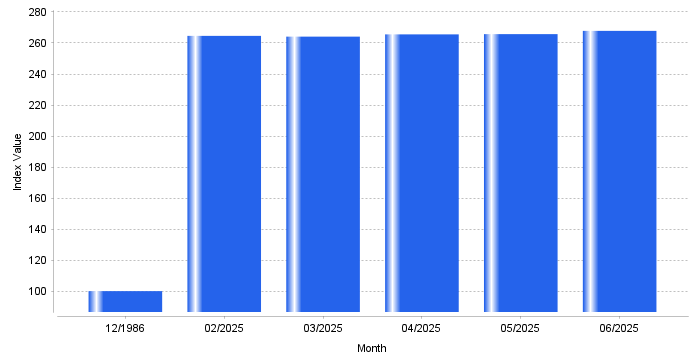
The dataset tracks the Consumer Price Index for 'Services by Other Medical Professionals,' capturing the inflation of outpatient ancillary care [cite: 1]. Originating at a baseline of 100 in December 1986, the index has surged to a record 267.845 by June 2025, corroborating the article's claim of skyrocketing out-of-pocket costs [cite: 1, 2]. This steady climb highlights how localized inflation bypasses stagnant insurance reimbursements. Consumers should proactively verify allowable charge limits and reconsider flexible spending allocations to offset these rising costs.
| Month | Index Value (Index (Dec 1986=100)) |
|---|---|
| 1986-12 | 100.00 |
| 2025-02 | 264.62 |
| 2025-03 | 264.14 |
| 2025-04 | 265.60 |
| 2025-05 | 265.74 |
| 2025-06 | 267.85 |
Source: U.S. Bureau of Labor Statistics / FRED — Consumer Price Index: Services by Other Medical Professionals
2. THE NUMBERS
Let us look at the exact data driving this shift. The Bureau of Labor Statistics tracks a highly specific consumer price index category called "Services by Other Medical Professionals." As of June 2025, this index reached a record level of 267.845, continuing a multi-month streak of upward momentum [1].
While broader medical care commodities have seen volatile swings in recent years, this particular index—which specifically excludes traditional hospital and physician services—has been climbing steadily without much media attention. The index is seasonally adjusted, and its recent trajectory paints a clear picture of localized price increases.
What does this macro data mean for your wallet? According to analysis by the Kaiser Family Foundation (KFF), because these ancillary services often come with strict per-visit copays or hard caps on the number of covered sessions, the inflationary pressure bypasses your insurance completely. When a physical therapy clinic raises its rates by 15 percent, and your insurance still only covers a flat dollar amount per session, you pay the entire difference. This dynamic translates that macro index surge into a very real $350 household budget hit over the course of a standard treatment plan.
3. WHY NOW
Why are these specific clinics suddenly more expensive over the last 18 to 24 months? The answer lies in the basic economics of running a local healthcare practice today. Independent optometrists, physical therapists, and local psychology practices have been squeezed by their own rising costs, from commercial rent to the software required for medical billing, alongside higher wages for administrative staff.
To stay afloat, many of these local providers had to raise their official list prices for their services. At the exact same time, major health insurance networks largely held firm on their reimbursement rates, keeping their payouts closer to 2019 levels. Caught in the middle is the consumer. When the clinic charges more just to keep the lights on, and the insurer declines to cover the difference, the gap is shifted to the patient via higher coinsurance, larger deductibles, or unexpected balance bills.
4. WHAT'S INTERESTING OR UNUSUAL
The true twist here is how this trend completely flips our usual assumptions about healthcare economics. Normally, you expect primary care and major hospital networks to be the primary drivers of healthcare inflation, while a quick trip to the chiropractor or the eye doctor remains a predictable transaction that barely dents your monthly budget.
But foundational research from the National Bureau of Economic Research highlights a surprising structural mechanism at play: the rapid financialization of ancillary health services. Private equity firms have actively acquired thousands of independent physical therapy clinics, eye care centers, and dermatology practices over the past decade [2]. Once consolidated into massive regional networks, these firms possess the leverage to negotiate harder, but more importantly, they often introduce separate charges for non-covered extras. You might be asked to pay out-of-pocket for advanced retinal imaging during a standard eye exam or specialized therapeutic modalities in physical therapy. You are paying premium prices for upgrades that used to be standard.

5. WHO IT AFFECTS
- Group benefiting: Large healthcare management organizations and private equity groups that have acquired local ancillary practices, giving them the pricing power to push list prices higher without losing patient volume.
- Group hurt: Active adults and aging populations who rely heavily on ongoing, maintenance-based treatments like physical therapy, chiropractic adjustments, or regular mental health counseling.
- Group that should pay attention: Anyone planning their upcoming Health Savings Account (HSA) or Flexible Spending Account (FSA) contributions, as older estimates for out-of-pocket wellness costs will leave them underfunded.
6. HISTORICAL CONTEXT
To understand the magnitude of this shift, we have to look back at the past decade of healthcare pricing. Historically, the inflation rate for "other medical professionals" was the sleepy, predictable corner of the medical economy. It generally hovered around a very manageable annual increase, historically much lower than the inflation seen in prescription drugs or inpatient hospital care.
However, tracing the data back to its 1986 baseline, the slope of the curve over the last three to four years represents a clear break from historical five-to-ten year averages [1]. We are no longer seeing standard cost-of-living adjustments; we are seeing a fundamental repricing of outpatient wellness services. The era of cheap, predictable ancillary care has ended, resetting the baseline for what a standard family must budget for holistic health.
7. WHAT THIS MIGHT MEAN
Looking ahead over the next 3 to 12 months, this data suggests a shift in how local clinics will operate. We will likely see an accelerated trend of physical therapists and specialized counselors dropping out of major insurance networks entirely, opting for cash-pay or concierge models. They will argue that insurance reimbursement simply is not worth the administrative headache.
For your money, this means you will increasingly be asked to pay the full list price upfront and submit a claim to your insurer yourself—often receiving only a fraction of your money back. Furthermore, this dynamic will likely trigger a fourth-quarter scramble, as consumers drain their FSAs much faster than anticipated, leading to delayed treatments or canceled appointments as families try to avoid paying fully out-of-pocket at year-end.
8. WHAT YOU CAN DO ABOUT IT
- Verify your specific allowable charge limit: Before beginning a multi-week treatment plan like physical therapy, call your insurance provider and ask for the "maximum allowable charge" for the specific billing codes the clinic uses. Compare this to the clinic's list price so you know your exact out-of-pocket gap before the first bill arrives.
- Ask for the self-pay discount rate: Surprisingly, many consolidated clinics offer a cash-pay discount that can actually be cheaper than running the visit through a high-deductible insurance plan. Always ask the billing department what the out-of-pocket price is if you bypass insurance completely.
- Recalculate your FSA and HSA targets: With open enrollment approaching, do not just copy last year's elections. Increase your pre-tax healthcare contributions by at least $350 to insulate your standard monthly budget from these specific inflationary hikes.