
Money / The Odds Desk
The betting market’s Nobel shortlist
A widow taking on the Kremlin. The woman behind Ozempic who was nearly written out of history. A novelist who has never boarded a plane. And 26,000 volunteers feeding a war zone. Meet the people the world is betting on to win a Nobel Prize this October.
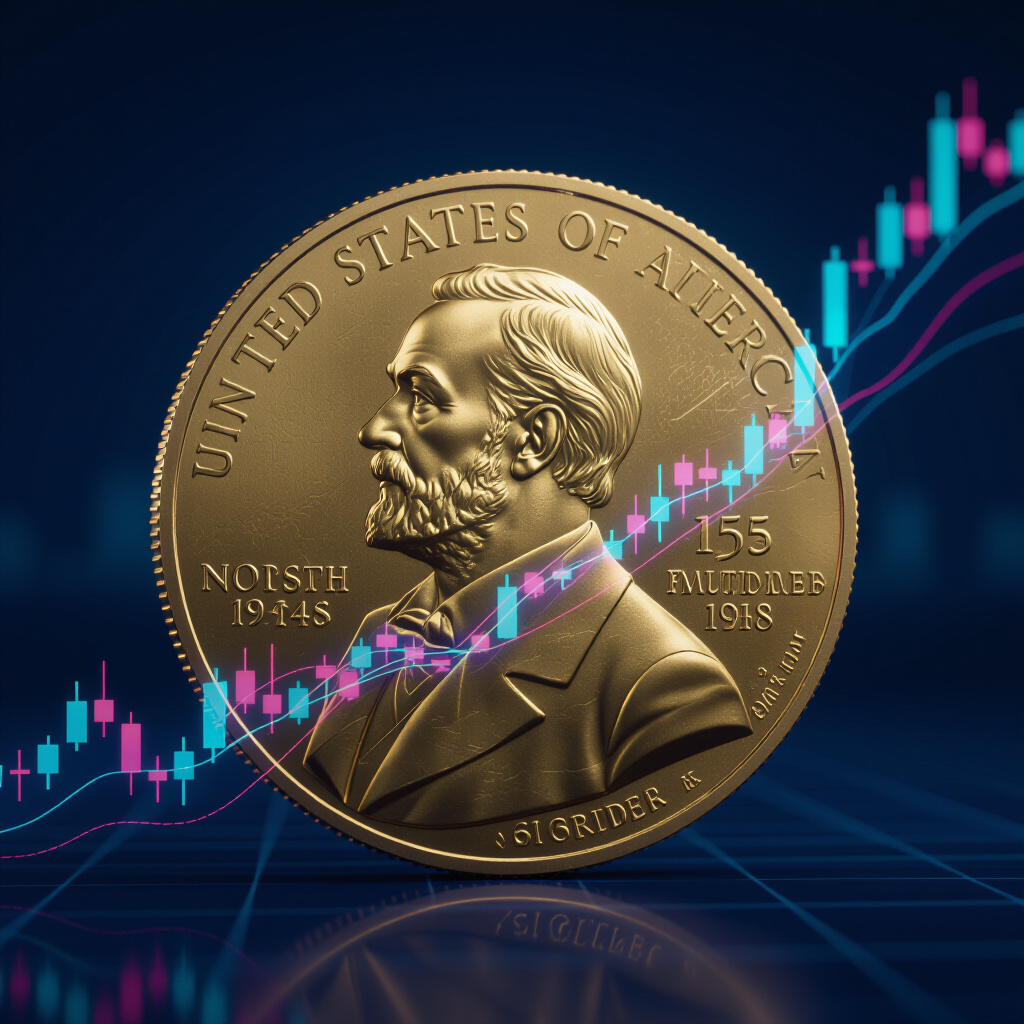
Last October, gamblers appeared to know the Nobel Peace Prize winner ten hours before the world did. It was not clever forecasting — Nobel officials later said the winner was likely revealed early by digital spying. That is the kind of drama these prizes generate now. The committees seal their lists until 2076, so bettors, bookmakers, and citation analysts built a shadow shortlist of their own. The odds are a side note. The people on the list are the show.
The Peace Prize: a soup kitchen is beating five presidents
287 nominees. Five Norwegians decide. Announced Friday, October 9. These are the leading names — and their stories.
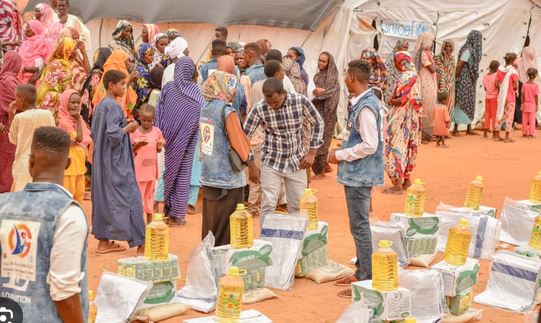
Sudan’s Emergency Response Rooms
The neighbors who became a country’s safety net
Markets: Kalshi favorite, 30¢ · Ladbrokes 3/1When civil war shredded Sudan in April 2023 and the government stopped functioning, ordinary people turned their living rooms into aid stations. They cook, deliver medicine, restore water, and bury the dead — while being shot at. No celebrity founder, no headquarters, no salaries.
- The “rooms” are often literal neighborhood rooms; coordination happens over patchy phone networks under bombardment.
- In 2025 they swept two classic Peace Prize preludes: the Rafto Prize and the Chatham House Prize.
- If they win, the $1.2 million prize would go to a network with no bank account of its own — the committee has handled that before.
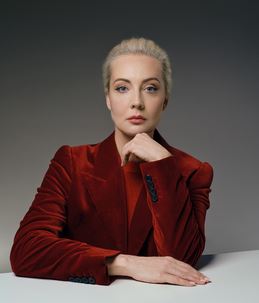
Yulia Navalnaya
She took over her husband’s war on corruption the day he died
Markets: Polymarket leader, 9¢Her husband, Alexei Navalny, was Russia’s most famous opposition leader — poisoned in 2020, imprisoned, dead in an Arctic penal colony in February 2024. Within days, the banker-turned-political-spouse announced she would continue his work, and she now leads the Russian opposition from exile. A prize for her would be Oslo aiming a spotlight directly at the Kremlin.
- Navalny said he was first impressed because she could name every Russian cabinet minister from memory.
- Once detained at a protest, she posted a photo from the police van — and joked about the bad lighting.
- She gave up a corporate banking career for the campaigns; media call her the “First Lady of the Russian opposition.”
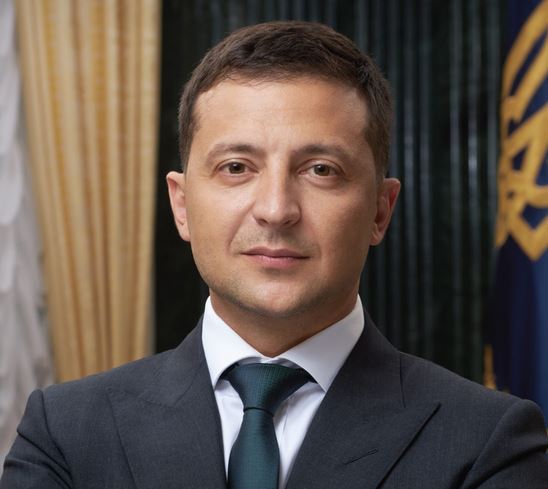
Volodymyr Zelenskyy
Played a president on TV. Then got the job for real.
Markets: 5.7¢ on Polymarket — favorite in 2022, lostBefore the war made him the world’s most recognizable wartime leader, Zelenskyy was a comedian whose hit show Servant of the People starred him as an accidental president. Ukraine then elected him the real one in 2019. He has sat near the top of this market every year since the 2022 invasion — but committees rarely honor leaders of wars still being fought.
TV president · won Ukraine’s Dancing with the Stars · voiced Paddington Bear in Ukrainian · 30+ television awards
Wartime president · refused evacuation with “I need ammunition, not a ride” · perennial Nobel candidate
- He holds a law degree he never used — his production company Kvartal 95 made 10 feature films instead.
- He was the bookmakers’ outright favorite in 2022; the prize went to human-rights groups instead. The favorite’s curse is real.
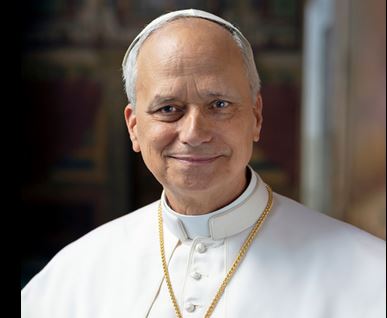
Pope Leo XIV
Chicago-born, tennis-playing, and 267th in an unbroken line
Markets: 3.1¢ on PolymarketRobert Francis Prevost became the first US-born pope in May 2025 and immediately became a global voice for ceasefires. Traders are pricing the chance the committee crowns a brand-new moral authority — the way it once did with freshly minted leaders like Obama in 2009.
- He is a documented Chicago White Sox fan — the Vatican now has a rooting interest in the AL Central.
- World No. 1 Jannik Sinner visited and handed him a racket; Leo eyed the priceless room and declined to rally. He had earlier joked they couldn’t invite “Sinner” to a Vatican tennis event.
- Napoli gave him a personalized No. 10 jersey — Maradona’s number.
- Son of a Navy-veteran educator and a librarian; first pope from the Augustinian order.
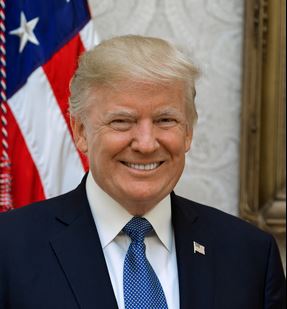
Donald Trump
Low odds, massive volume, and a collapse traders watched in real time
Markets: 2.5¢ on Polymarket — down from ~14¢ in JanuaryForeign leaders from Cambodia, Israel, and Pakistan publicly said they nominated him. Traders spent early 2026 believing it might happen — then his June ceasefire with Iran collapsed in July, and his price collapsed with it. Here is the strange part: even at 2.5¢, his contract has drawn about $4.4 million in bets, roughly 15 times the volume traded on the favorite. Nobody is more wagered-on. Few are priced lower.
- He has a cameo in Home Alone 2 and reportedly kept a desk button that summoned a Diet Coke.
- The 45th and 47th president is one of the only world leaders whose pre-political fame came partly from reality TV — 14 seasons of The Apprentice.
Traders have drifted away from famous politicians and toward frontline humanitarians — a soup-kitchen network and Doctors Without Borders (already a 1999 winner; the Red Cross has won three times) sit atop the boards, ahead of every president. The committee’s taste, the market suspects, runs quieter than the headlines.
Literature: geniuses, recluses, and the Favorite’s Curse
The Swedish Academy announces October 8. The people on the boards are more interesting than the odds will ever be.
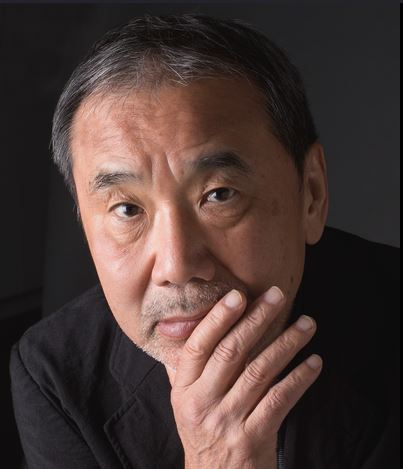
Haruki Murakami
Jazz-bar owner, marathon obsessive, and the most famous never-winner alive
Odds: favored for 15+ years; drifted to 18/1 by 2025Murakami writes about ordinary people — cooking pasta, listening to records — until reality quietly breaks and cats talk or a second moon appears. He is one of the world’s most-read living novelists and the Nobel’s most famous perpetual runner-up. His superfans, the “Harukists,” gather in Tokyo cafés every October to toast the announcement. They have gone home disappointed every single year.
The Favorite’s Curse, in one scoreboard.
- Before writing, he ran a Tokyo jazz bar called Peter Cat; the idea for his first novel struck him at a baseball game, mid-beer.
- He has run dozens of marathons plus an ultramarathon — and Harry Styles credits Murakami’s running memoir with changing how he thinks about running. The two later interviewed each other.
- He owns 10,000+ vinyl records and refuses to read his own reviews.
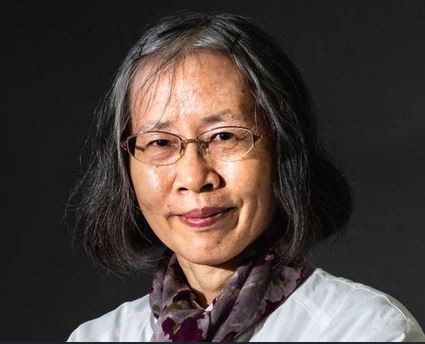
Can Xue
Elementary-school education. Factory floor. Tailor’s shop. Nobel favorite.
Odds: bookmaker favorite in 2023 and 2024; co-favorite 2025No Nobel contender anywhere has a life story like hers. Born Deng Xiaohua, her formal schooling ended after elementary school when China’s political upheaval hit her family. What followed is the most improbable path in world literature:
- She taught herself literature by devouring Kafka, Borges, Dante, and Shakespeare at home — then wrote book-length criticism of them.
- Her pen name means both dirty snow that refuses to melt and pure snow on a mountain peak. She chose it on purpose.
- She and her husband taught themselves tailoring and ran the shop while she wrote her first stories.
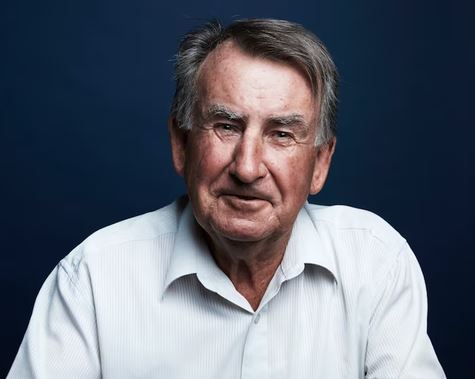
Gerald Murnane
The 2025 betting favorite has never left Australia — or boarded a plane
Odds: 6/1 favorite on the final 2025 boardIf Murnane wins, the Nobel ceremony has a problem: the guest of honor does not fly. The 87-year-old lives in Goroke, a town of a few hundred in rural Victoria, where the world’s literary press must drive to find him. His hypnotic, memory-looping novels made him a cult favorite for decades before the bookmakers caught on.
- He has never left Australia, never flown, and doesn’t use a computer. He writes on a typewriter.
- He has spent decades building an imaginary horse-racing universe — complete with fictional countries, stables, and race records — purely for himself.
- He says he has no sense of smell, and his personal archive includes files bluntly labeled with his opinions of literary critics.
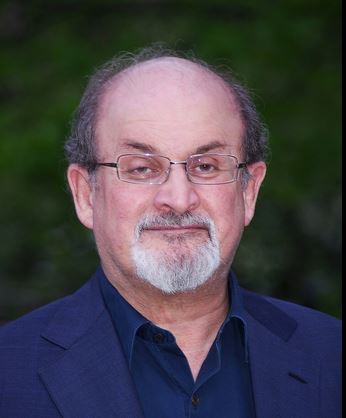
Salman Rushdie
Wrote an ad slogan for chocolate. Survived a fatwa and a knife. Still writing.
Odds: 18/1 on the final 2025 boardNo living writer’s biography swings between glamor and danger like Rushdie’s. The Booker Prize made him a star; the fatwa over The Satanic Verses made him a symbol; the 2022 stage attack that blinded his right eye nearly made him a martyr. He answered it the only way he knows — with a memoir, Knife, now an Alex Gibney documentary.
- As a London ad copywriter he coined “Irresistibubble” for Aero chocolate before Midnight’s Children changed everything.
- He was married to Padma Lakshmi, the Top Chef host; his current wife, poet Rachel Eliza Griffiths, filmed parts of his hospital recovery for the documentary.
- Longtime friends with Bono — he hid from the fatwa partly in the orbit of U2.
The scientists already living in your medicine cabinet
No real betting markets here — but citation data has called 89 eventual winners. These are the people it points to, and what their work already did to your life.
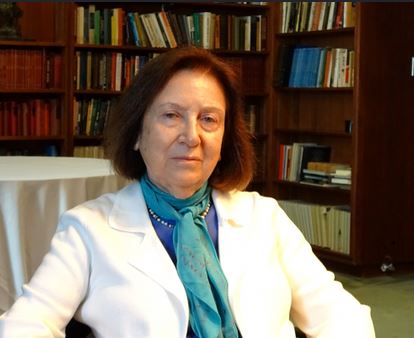
Svetlana Mojsov & the Ozempic pioneers
She found the hormone behind the world’s most famous drugs. Then she had to fight to stay in the story.
Signal: 2024 Lasker Award · 2025 Breakthrough Prize · no betting market existsIn the 1980s, a Yugoslavian-born chemist at Mass General synthesized hormones by hand and pinpointed the exact active form of GLP-1 — the gut signal that tells your brain you’re full. That work helped lay the biological foundation for Ozempic and Wegovy. Then came the twist: the early patents left her off entirely, credit pooled around male colleagues, and she spent years — including a 12-year patent fight — forcing her name back into history. Science, Nature, and finally the 2024 Lasker Award settled it: she belongs.
GLP-1 vanishes from your blood in about 2 minutes — useless as a drug
Novo Nordisk’s Lotte Bjerre Knudsen engineered it to last a week — one shot, seven days
- She trained under Bruce Merrifield, who won the 1984 Chemistry Nobel — her mentor got the prize she’s now tipped for.
- The committee’s dilemma — five pioneers, a three-person maximum — turned somber in December 2025 when co-discoverer Joel Habener died at 88. Nobels are never posthumous.
- Habener first found the gene in anglerfish; Copenhagen’s Jens Juul Holst worked it out in pig intestines. Blockbusters have humble origins.
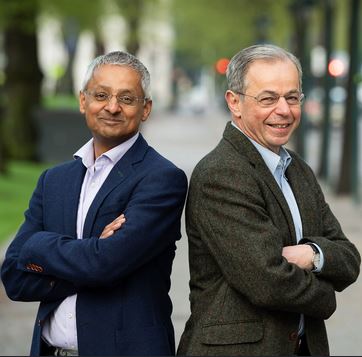
Shankar Balasubramanian & David Klenerman
Two Cambridge chemists walked into a pub. Your DNA test walked out.
Signal: 2026 Princess of Asturias Award · Breakthrough Prize · both knightedReading the first human genome took 13 years and roughly $3 billion. Over pints at Cambridge’s Panton Arms, these two sketched a way to read millions of DNA fragments simultaneously instead of one at a time — Balasubramanian’s diary entry from that night reads “the Solexa idea!” Illumina bought their startup for roughly $600 million, and the technology became foundational to modern high-throughput DNA sequencing — including the virus tracking that ran through COVID.
- Balasubramanian, born in Madras and raised in Cheshire, dreamed of playing professional soccer before chemistry got him. Both men were later knighted.
- In his “spare” academic time he studies G-quadruplexes — bizarre four-stranded DNA knots.
- Fresh signal: the pair (with Pascal Mayer) won the 2026 Princess of Asturias Award in June.
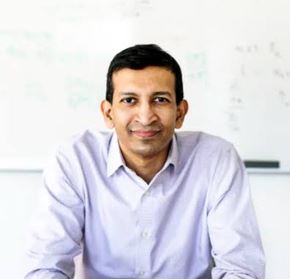
Raj Chetty
He measured the American Dream — block by block — and found it depends on your address
Signal: Clark Medal · MacArthur “genius” grant · perennial watchlistChetty took billions of anonymized tax records and answered a question everyone suspected but nobody could prove: two similar kids, a few miles apart, grow up into measurably different incomes — and moving a child to a higher-opportunity neighborhood early changes their adult earnings. City governments now redesign housing policy around his maps.
Kid A’s block
High-mobility neighborhood: better schools, two-parent households, community ties — measurably higher adult income
Kid B’s block
Low-mobility neighborhood: same talent, same effort — a permanently lower earnings track, on average
- Moved from India at 9, finished his Harvard PhD at 23, and became a UC Berkeley professor the same year — then one of Harvard’s youngest tenured professors ever.
- The tiny Kalshi economics market ($1,625 traded — a used-car deposit) actually prices Harvard’s Ariel Pakes first at 22¢. With markets this small, the citation record matters more.
About those odds (the fine print)
The markets are a fun sideshow with one genuinely wild story — and one big honesty problem.
The wild story first. Two days before the 2025 announcement, María Corina Machado was a forgotten 4¢ longshot. Ten hours before it, accounts — including one created that same day — began buying her furiously; ninety minutes later she was the runaway favorite, and the next morning she won. The traders cleared about $90,000. In January, the Nobel Committee said the winner was likely revealed early by digital spying — detected, not predicted.
The honesty problem: these markets are tiny and they disagree with each other. Kalshi’s favorite (Sudan’s ERRs, 30¢) is not even listed on Polymarket, whose board is led by Navalnaya at 9¢. And a “20% chance” means very little when the entire market is smaller than a used car:
How we measured this
Candidate selection blends prediction-market prices (Polymarket and Kalshi, observed August 18, 2026), the final pre-announcement 2025 bookmaker boards for Literature (2026 boards open in September), Clarivate’s Citation Laureates program, and precursor prizes (Lasker, Breakthrough, Wolf, Kavli, Rafto, Princess of Asturias, John Bates Clark). Market prices imply probabilities only as far as thin, event-driven markets can; the exchanges list different candidate slates, resolution rules differ, and Polymarket resolves shared prizes to a single outcome. Nominations themselves are sealed until 2076; “publicly nominated” means a nominator announced it, which the committee neither confirms nor denies.
Biographical details are drawn from the named primary and news sources in the references, including Reuters, the Guardian, university and foundation biographies, and the laureates’ institutions. The Machado trading surge and its espionage finding are cited to contemporaneous reporting and the committee’s January 2026 statement. Nothing here is betting advice, and reported market prices are not endorsements of any candidate.
Common questions
Who is favored to win the 2026 Nobel Peace Prize?
Can you win a Nobel Prize twice?
How accurate are Nobel prediction markets?
Why are Nobel nominations secret?
Sources & references
Market prices are point-in-time observations from public exchanges and move continuously. Candidate science summaries are simplified for a general audience; the underlying prize citations and biographies are linked. The Machado trading surge and espionage finding are cited to contemporaneous reporting and the committee’s January 2026 statement.
- Nobel Foundation. Prize facts: the 50-year secrecy rule, 11M SEK purse, the three-winner maximum, 633 prizes and 990 laureates through 2025, and the 2026 announcement schedule (Oct 5–12). ↗
- Norwegian Nobel Committee. 287 candidates for 2026 (208 individuals, 79 organizations); shortlist of 20–30 names; deadline January 31. ↗
- Polymarket. 2026 Peace Prize market: ~$23.4M volume; Navalnaya 9¢, Zelenskyy 5.7¢, UNRWA 4.3¢, Pope Leo XIV 3.1¢, Trump 2.5¢ (Aug 18); single-outcome resolution rules for joint awards. ↗
- Kalshi. Peace market ($786K): ERRs 30¢, MSF 15¢; plus micro markets in Physics ($8.2K; Kitaev/Kane/Preskill), Economics ($1.6K; Pakes 22¢), and Literature (<$1K). ↗
- OLBG. Ladbrokes’ late-July board: Sudan’s ERRs 3/1 favorites; Trump drifting to 12/1; final 2025 Literature odds via NicerOdds (Murnane 6/1 favorite, Murakami 18/1). ↗
- The Guardian. The October 2025 pre-announcement betting surge on María Corina Machado and the resulting Norwegian investigation. ↗
- Forbes. Minute-by-minute detail: 3.6¢ at 6:30 PM ET to 73¢ by 8:00 PM; roughly $90,000 in combined trader profit. ↗
- Reuters. January 2026: the Nobel Committee concluded digital espionage likely revealed the 2025 winner early. ↗
- Rafto Foundation / The Guardian. Sudan’s ERRs: 2025 Rafto and Chatham House prizes; ~26,000 volunteers (40% women) across 96 districts reaching 29M+ people; ~160 volunteers killed. ↗
- Reuters. Profile of Yulia Navalnaya: the Turkey meeting, the banking career, the cabinet-ministers anecdote, and her takeover of the opposition movement. ↗
- Presidential Office of Ukraine. Zelenskyy’s official biography: law degree, Kvartal 95, 10 feature films, 30+ television awards. ↗
- The Vatican / AP. Pope Leo XIV’s biography; AP reporting on the White Sox fandom, the Sinner racket visit, and Napoli’s No. 10 jersey. ↗
- Reuters. The 2026 field: leaders of Cambodia, Israel, and Pakistan publicly said they nominated Trump; the committee neither confirms nor denies. ↗
- MIT Contemporary Chinese Writers. Can Xue’s biography: elementary-school education, factory work, barefoot-doctor years, the tailoring business, and her pen name’s double meaning. ↗
- The Guardian. Gerald Murnane in Goroke: never left Australia, never flown, the typewriter, the imaginary racing world, no sense of smell. ↗
- People. Rushdie on surviving the 2022 attack; the Knife memoir and Alex Gibney documentary; Rachel Eliza Griffiths’ role. ↗
- Lasker Foundation. The 2024 award to Mojsov, Habener, and Knudsen; GLP-1’s 1–2 minute half-life; ~900 million adults living with obesity. ↗
- Lasker Foundation. In memoriam: Joel Habener (1937–2025), died December 28, 2025 — Nobels are never awarded posthumously. ↗
- Science. Svetlana Mojsov’s fight for recognition: left off early patents, the 12-year battle to be added, and the corrections she forced. ↗
- KFF. Roughly 1 in 8 US adults report having taken a GLP-1 drug. ↗
- University of Cambridge. The Solexa origin story at the Panton Arms pub; Illumina’s ~$600M acquisition; the 2026 Princess of Asturias Award. ↗
- NHGRI. Genome sequencing costs: ~$3 billion for the first human genome to a few hundred dollars today. ↗
- Harvard / Opportunity Insights. Raj Chetty: the mobility research, Berkeley professorship at 23, Clark Medal, MacArthur Fellowship. ↗
- Clarivate. Citation Laureates: 465 named since 2002, 89 subsequent Nobel winners, six among 2025’s laureates; it never predicts the year. ↗
- Scientific American. Mileva Marić’s life, including the 1919 settlement promising her the proceeds of a Nobel Prize Einstein had not yet won. ↗
- Nobel Foundation (history). The 1864 Vinterviken explosion that killed Emil Nobel; Alfred’s 355 patents; the unverified “merchant of death” obituary legend; Bertha von Suttner’s 1905 Peace Prize. ↗